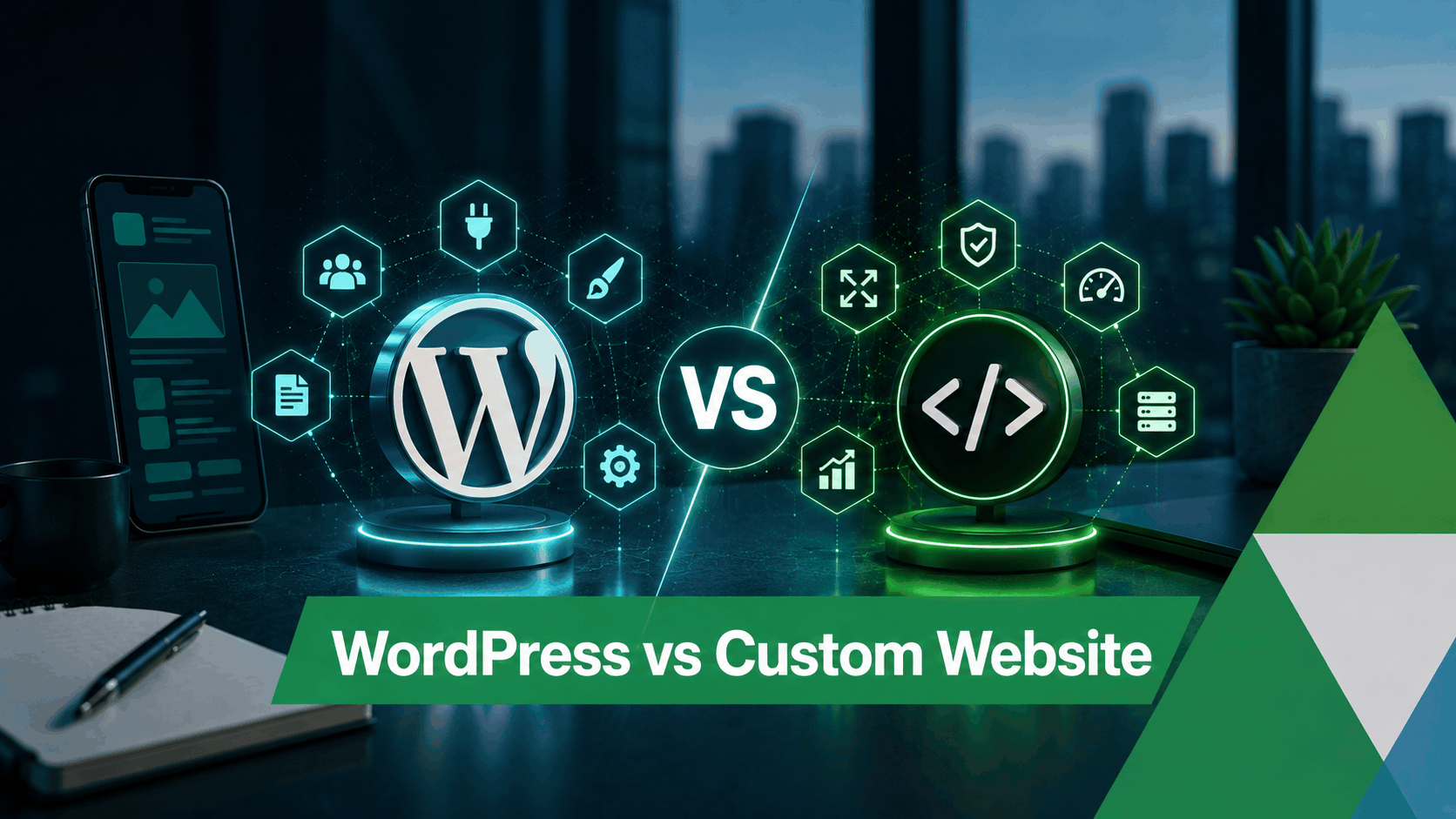
WordPress and custom website development can both be good choices, but they solve different problems. The right option depends on your goals, budget, content needs, integrations, and future plans.
One of the most common questions we hear from businesses planning a new website is whether they should choose a WordPress website or invest in a bespoke solution. The answer is rarely as simple as one option being better than the other. Both approaches have strengths, and the right decision usually depends on what the website needs to achieve both today and in the future.
When WordPress Can Be the Right Choice
WordPress powers a significant portion of the web and remains a popular choice for good reason. It offers a familiar content management experience, a large ecosystem of plugins, and a wide range of themes that can help businesses launch websites efficiently.
For content-focused websites, blogs, marketing sites, and many small business websites, WordPress can provide everything needed without requiring extensive custom development. Teams can manage content internally, publish updates easily, and take advantage of existing tools for SEO, forms, and marketing integrations.
When requirements are relatively straightforward, a well-built WordPress website can be a practical and cost-effective solution.
When Bespoke Development Is Stronger
A custom website is often better when the project needs specific workflows, stronger performance control, integrations, customer portals, dashboards, or functionality that does not fit neatly into an off-the-shelf theme.
Bespoke website development allows every aspect of the platform to be designed around business requirements. Rather than adapting processes to fit existing plugins or themes, the website is built specifically for the users, goals, and systems involved.
This approach is particularly valuable when businesses require customer account areas, booking platforms, internal systems, complex integrations, member portals, or highly customised user experiences.
Comparing Flexibility and Scalability
One of the biggest differences in the WordPress vs custom website discussion is flexibility. WordPress offers flexibility through plugins and extensions, while custom web development offers flexibility through complete control of the underlying platform.
For growing businesses, scalability is often an important consideration. A website that starts as a simple marketing platform may later require customer accounts, advanced integrations, automated workflows, or additional digital services. Planning for future growth can help avoid expensive rebuilds later.
Performance and Security Considerations
Performance and security depend heavily on implementation quality rather than platform choice alone. A well-maintained WordPress website can perform exceptionally well, while a poorly designed custom platform can create challenges.
However, bespoke development can offer greater control over performance optimisation and security architecture because only the required functionality is included. By contrast, WordPress projects often rely on third-party plugins, which require ongoing maintenance and updates.
Thinking Beyond the Initial Build
When evaluating website options, it's important to think beyond launch day. Content updates, SEO improvements, accessibility requirements, integrations, maintenance, and future feature requests all influence the long-term success of a platform.
The cheapest option today is not always the most cost-effective option over several years. Likewise, investing in a fully bespoke platform may not make sense if a simpler solution can comfortably support your objectives.
Which Option Is Right for Your Business?
There is no universal answer. Many successful businesses run on WordPress, while others benefit greatly from bespoke website development. The key is understanding your current requirements, future ambitions, operational processes, and budget.
At CoreTechnics, we help organisations evaluate both routes objectively. Sometimes WordPress is the right answer. Sometimes custom web development is the better long-term investment. Our goal is always to recommend the approach that best supports the business rather than forcing every project into the same solution.
If you're unsure which route makes sense for your organisation, a short discovery conversation can often clarify requirements, identify future challenges, and help ensure your next website is built on the right foundations.