App Development
The Mobile App Development Process: From Idea to Launch
A step-by-step overview of planning, designing, building, testing, launching, and supporting a mobile app.
A step-by-step overview of planning, designing, building, testing, launching, and supporting a mobile app.
A step-by-step overview of planning, designing, building, testing, launching, and supporting a mobile app.
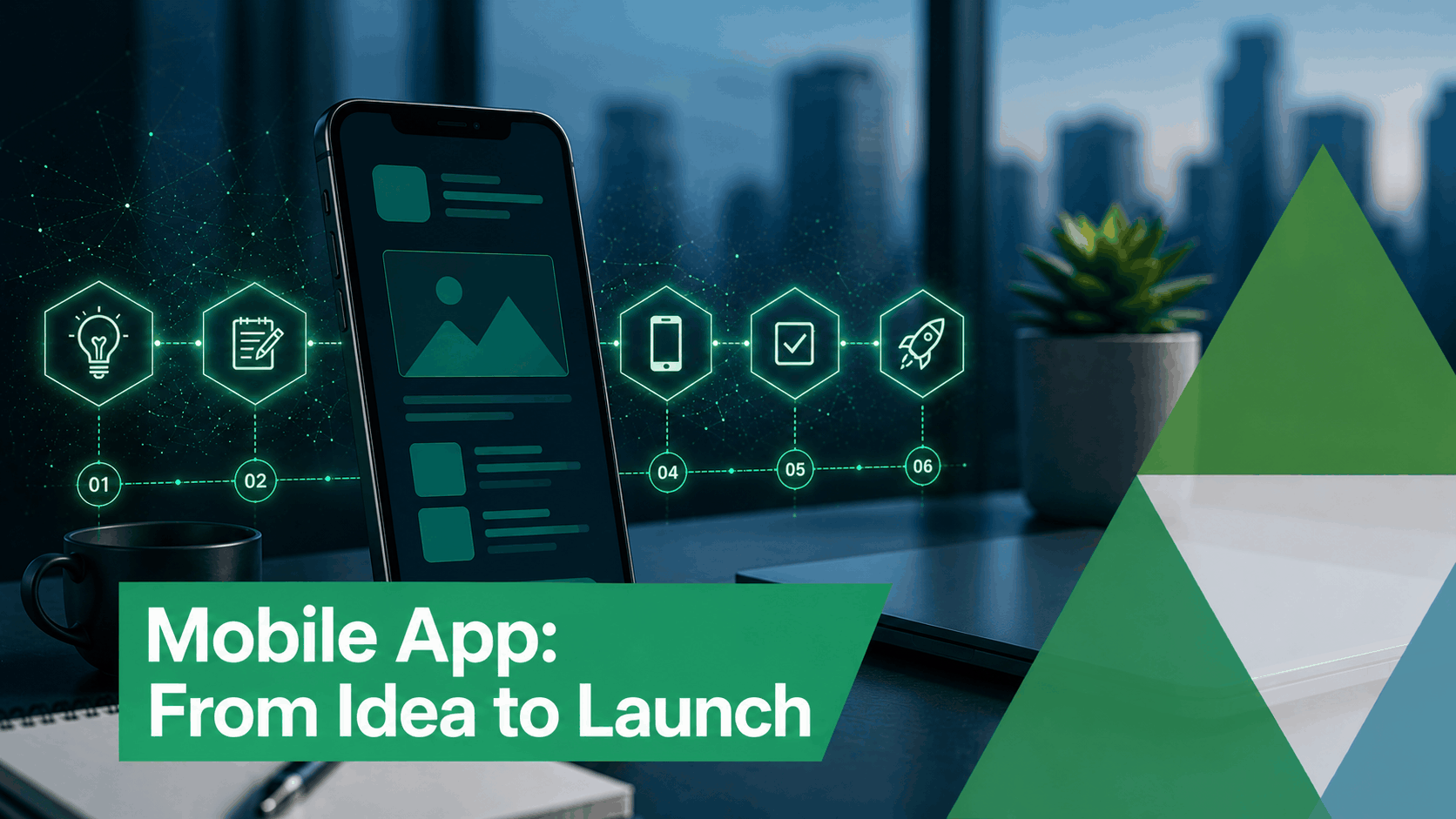
A successful app project usually starts long before development. The early work is about understanding users, defining the core problem, and choosing the right route before screens and features are added.
One of the biggest misconceptions we see is that app development starts with coding. In reality, the most successful projects spend time validating ideas, understanding user needs, and planning how the app will support real business goals. A strong foundation often saves significant time, money, and frustration later in the project.

The best app projects stay focused on what users genuinely need to do, not how many features can be added.
The mobile app development process begins with discovery. This stage focuses on understanding the purpose of the application, who will use it, and what problems it should solve. Effective app planning often includes competitor research, user profiling, feature prioritisation, and technical feasibility reviews.
At this stage, teams should avoid trying to build everything at once. Instead, the focus should be on identifying the minimum viable product (MVP) — the smallest version of the app that provides genuine value to users. This approach reduces risk and allows faster validation of the concept.
Once requirements are understood, attention turns to user experience (UX) and user interface (UI) design. This stage maps out how users will move through the application and interact with its features.
Wireframes are often created first to establish structure and navigation. These evolve into visual designs that reflect branding, accessibility requirements, and user expectations. Good design is not just about appearance — it helps users complete tasks quickly and with minimal frustration.
With designs approved, development begins. This is where the application is built, tested, and integrated with any required backend systems, APIs, databases, or third-party services.
Depending on the project requirements, development may include both iOS app development and Android app development. Some projects use cross-platform technologies to support multiple devices from a shared codebase, while others require native development for maximum performance and platform-specific functionality.
Development is usually completed in stages rather than all at once. This allows features to be reviewed regularly, feedback to be incorporated, and potential issues to be identified before they become expensive problems.
Testing is one of the most important app development stages. Even well-built applications can contain bugs, performance issues, or usability challenges that only become apparent during real-world use.
Quality assurance typically includes functional testing, device compatibility testing, performance testing, security reviews, and user acceptance testing. The goal is to ensure the application works reliably across different devices, operating systems, and usage scenarios.
Thorough testing before launch helps protect user confidence and reduces the likelihood of negative reviews appearing in app stores.
After testing is complete, the application is prepared for release. This involves configuring app store listings, preparing screenshots, creating descriptions, meeting platform requirements, and submitting the application for review.
Launch day is often viewed as the finish line, but it is really the start of the next phase. User feedback, analytics, and performance monitoring quickly begin providing valuable insights into how the application performs in the real world.
The most successful apps continue to evolve after launch. New operating system versions, changing user expectations, security updates, and feature requests all require ongoing attention.
Regular updates help maintain performance, improve security, and keep users engaged. Analytics can also highlight opportunities to improve user journeys, increase conversions, and prioritise future development work.
At CoreTechnics, many of the applications we support today have been through multiple development cycles since their initial launch. Long-term success often comes from continuous improvement rather than trying to deliver every feature in version one.
The strongest mobile app projects are usually the result of good planning rather than technical complexity. Spending time understanding users, defining priorities, and choosing the right technical approach can dramatically improve outcomes.
Whether you're exploring a new business idea, modernising internal processes, or building a customer-facing platform, investing in proper app planning can help reduce risk and create a clearer path from concept to launch.
If you're considering a mobile application and aren't sure where to begin, speaking with an experienced development team can often provide clarity on scope, technology choices, timelines, and realistic budgets before significant investment is made.
Answers to common planning, infrastructure, and delivery questions related to this article.
CoreTechnics designs and develops practical applications built around real users, business goals, and long-term support.
Explore App DevelopmentNeed hands-on support with this area? Explore the related CoreTechnics service for a more direct project route.
Explore ServiceThe mobile app development process typically includes discovery, app planning, design, development, testing, launch, and ongoing support. Each stage helps ensure the application meets user needs and business objectives.
Timelines vary depending on complexity, features, integrations, and platform requirements. Simple applications may take a few months, while larger projects can take considerably longer. Proper planning helps establish realistic timelines early in the process.
This depends on your target audience, business goals, and budget. Some projects prioritise iOS app development, others focus on Android app development, and many choose cross-platform solutions to support both simultaneously.
An MVP, or Minimum Viable Product, is a version of the app that contains only the essential features needed to deliver value and validate the concept with real users before investing in further development.
App planning helps identify user needs, define priorities, estimate costs, reduce risk, and avoid building unnecessary features. It is one of the most important stages of any successful app project.
Costs vary significantly based on functionality, integrations, design complexity, security requirements, and ongoing support needs. Most projects benefit from an initial discovery phase to establish accurate estimates.
After launch, applications typically require monitoring, updates, bug fixes, security maintenance, analytics reviews, and feature improvements. Ongoing support helps ensure long-term success.
Yes. CoreTechnics helps businesses and organisations plan, design, develop, launch, and support mobile applications, providing guidance throughout the entire development lifecycle.
Explore more guidance from the CoreTechnics team across planning, infrastructure, hosting, and product delivery.
A clear comparison of WordPress and bespoke website development, including flexibility, cost, performance, scalability, and long-term control.
Software EngineerJames Durham

A practical guide to website pricing in the UK, including what affects cost, common project types, and how to choose the right level of investment.
 Digital Growth ConsultantZara Collins

The NCSC has warned UK organisations about two critical PHP vulnerabilities. Here’s what the issue means for websites and the steps owners should take now.
 Software Engineer & DirectorDan Walker
Get a fast response with the right advice, quote or support, tailored to you.
 Quick replies from real people
Expert advice, honest pricing
Solutions built around your goals
Quick replies from real people
Expert advice, honest pricing
Solutions built around your goals