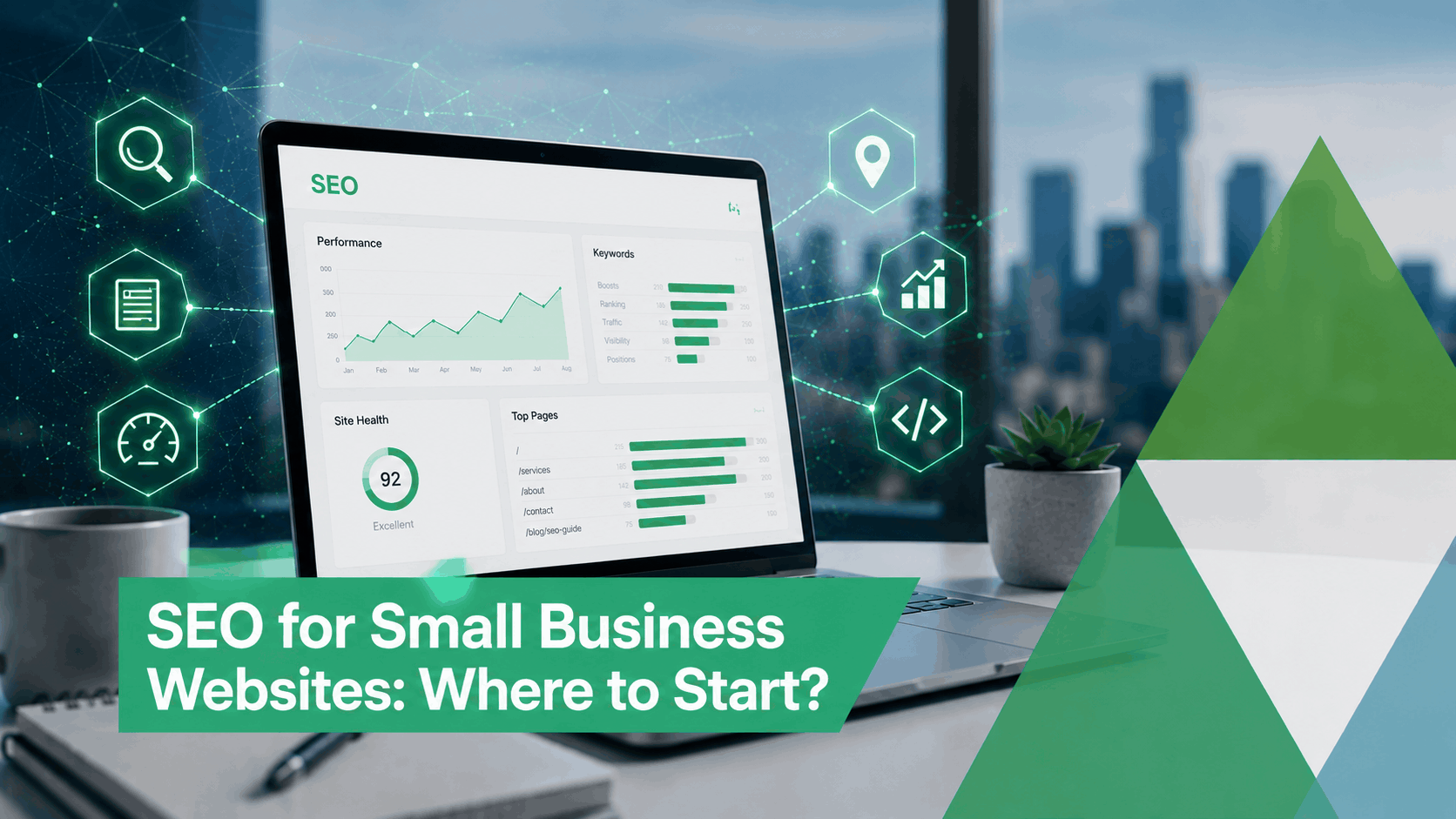
Small business SEO works best when the website clearly explains what the business does, who it helps, where it operates, and why customers should trust it.
Many business owners assume SEO is a highly technical process filled with complex tools and algorithms. While there are technical elements involved, the foundations of SEO are often much simpler. Search engines want to show users helpful, relevant, and trustworthy content. If your website helps people find answers, understand your services, and take action easily, you're already moving in the right direction.
Start with useful pages, not tricks
Good SEO starts with useful content, clear service pages, relevant internal links, fast loading, accessible structure, and pages that answer real customer questions.
The days of trying to rank websites through keyword stuffing or shortcuts are long gone. Modern SEO for small business websites is about creating genuine value. Every page on your website should have a purpose and help visitors understand something useful about your business, services, products, or expertise.
Understand What Your Customers Are Searching For
One of the most important website SEO basics is understanding search intent. Before creating content, think about the questions your customers ask most often. What problems are they trying to solve? What services are they looking for? What information would help them make a decision?
Creating pages that answer these questions naturally helps search engines understand your website while providing value to visitors. Service pages, guides, FAQs, and insight articles can all contribute to stronger visibility when they address genuine customer needs.
Build a Clear Website Structure
A strong SEO website structure helps both visitors and search engines navigate your content. If users struggle to find information, search engines may also find it difficult to understand how your website is organised.
Important services should be easy to access from the main navigation. Related pages should link to one another naturally, and content should be grouped into logical categories. This creates a better user experience while helping search engines understand the relationships between different pages.
Don't Overlook Local SEO
For many businesses, local SEO can be one of the fastest ways to improve visibility. If you serve customers within a specific town, city, county, or region, your website should clearly communicate where your services are available.
Location-specific service pages, accurate contact details, Google Business Profile management, customer reviews, and locally relevant content can all help improve visibility in local search results. For service-based businesses in particular, local SEO is often just as important as broader search visibility.
Page Speed and User Experience Matter
Search engines want to provide users with a positive experience. Websites that load slowly, perform poorly on mobile devices, or create frustration for visitors can struggle to compete against faster, more user-friendly alternatives.
Improving image optimisation, reducing unnecessary scripts, maintaining reliable hosting, and ensuring responsive layouts can all contribute to better performance. These improvements not only support SEO but can also increase enquiries and conversions.
Accessibility Supports SEO Too
Accessibility is often overlooked when discussing SEO, but it plays an important role. Clear headings, descriptive links, image alt text, readable content, and logical page structure help users with accessibility needs while also making content easier for search engines to understand.
A website that works well for a wider audience is generally more effective overall. Improving accessibility often benefits usability, engagement, and search visibility at the same time.
SEO Is a Long-Term Investment
One of the biggest misconceptions about small business SEO is that results happen overnight. In reality, SEO is usually a gradual process of improving content, refining website structure, earning trust, and demonstrating expertise over time.
Consistent improvements often produce better long-term results than short bursts of activity. Publishing useful content, updating older pages, improving performance, and monitoring user behaviour can all contribute to sustainable growth.
Where Many Small Businesses Benefit from Support
Many business owners know SEO is important but struggle to find the time to plan content, improve website structure, monitor performance, and keep everything updated. That's completely understandable. Running a business already requires enough attention.
At CoreTechnics, we often help businesses improve the foundations that support long-term visibility, including website architecture, content planning, technical performance, accessibility, and conversion-focused design. In many cases, a few well-planned improvements can have a bigger impact than constantly chasing the latest SEO trends.
If you're unsure where to begin, start by asking a simple question: does your website clearly help visitors understand what you do, why they should trust you, and how they can take the next step? Building from that foundation is often the best place to start.